Deck and substrate
Soft, damaged, uneven, or unsuitable areas should be identified before the finished metal goes on.
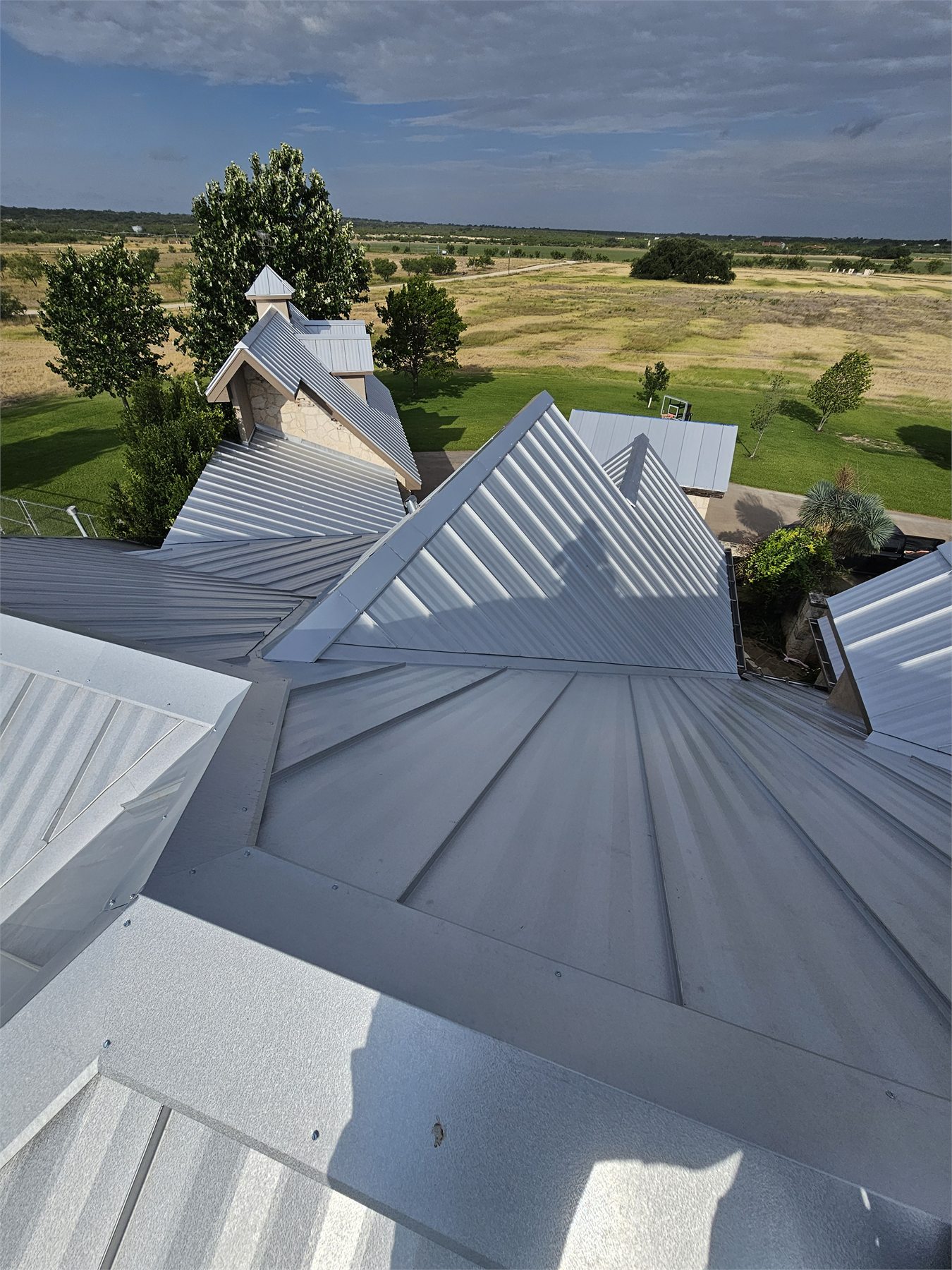
A replacement is the opportunity to correct worn materials, review the roof beneath them, and build a complete metal roofing system.
Start with the existing roof
The visible roof covering is only one part of the job. The deck, transitions, flashing, ventilation, drainage, and penetrations also deserve attention.
Some projects require complete removal of the existing materials. Others may present different options after the structure and local requirements are evaluated. MG Metal Roofing explains what is found and how it affects the proposed work.
The goal is a replacement plan suited to the actual house—not a one-size-fits-all package.
What gets reviewed
Soft, damaged, uneven, or unsuitable areas should be identified before the finished metal goes on.
Valleys, walls, chimneys, roof edges, and penetrations are planned to direct water away from the building.
Panel profile, finish, attachment, trim, and related materials are selected for the specific roof.
Replacement sequence
The details vary, but a clear sequence helps protect the home and keep the work organized.
Study the existing covering, roof shape, problem areas, and access.
Remove materials as required and address the roof surface beneath them.
Build the new metal system, including panels, transitions, and trim.
Review the work, remove job debris, and discuss the completed roof.
Common questions
That depends on the existing materials, roof condition, design, and applicable requirements. The property should be evaluated before that decision is made.
Some warning signs may be visible during evaluation, but concealed conditions can become clear only after existing materials are removed.
Yes, when the home and roof are suitable. The available metal systems and preparation requirements can be discussed after an evaluation.
MG Metal Roofing can look at the existing conditions and explain practical options for the next roof.